
Both issues are critical in the short, medium, and long term to building a robust and sustainable economy.
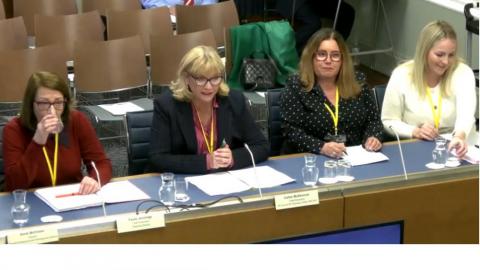
NICVA’s Chief Executive Celine McStravick, alongside voluntary and community sector colleagues currently delivering work aimed at addressing economic inactivity, talked to the committee about the crucial role the Voluntary and Sector can play in getting Northern Ireland’s economy working for everyone .
Economic Inactivity
Economic Inactivity is when a person aged 16-64 is neither in work, nor looking/available for work due to a unique set of circumstances. It’s a distinct category, different to being unemployed.
People deemed economically inactive are more likely to be people with a disability and/or long-term health condition, carers, women, people from an ethnic minority or those with multiple or complex needs.
These, and other groups of people affected, are the people who the Voluntary and Community Sector works with and supports every day, so we believe the Sector has a key role to play in reducing economic inactivity rates.
There has been a shift in the underlying reasons for economic inactivity over the past 25 years. The proportion inactive due to family and home care reasons has reduced substantially and long-term sickness is now the largest contributor to inactivity.
Around. 48,000 of those who are inactive (15% of the total) locally would like to work, which shows the need for understanding of the unique barriers people face and need to overcome these and to unlock their labour market potential.
The Voluntary and Community Sector can be at the heart of this development of our economy.
UK Shared Prosperity Fund
To date, £57 million has been invested in Northern Ireland through the UK Shared Prosperity Fund (UKSPF) in projects delivering on UK Government’s commitment to support many more people to move from economic inactivity into sustainable employment.
There are over 100 organisations funded to deliver programmes via UKSPF , currently supporting over 26,000 + people to access employment.
There is evidence this money is having a real impact with rates of economic inactivity decreasing.
NICVA, say we need to build on these projects success and maintain progress.
However, NICVA are concerned about the future of this funding, which is currently due to come to an end in March 2025.
If a longer-term solution isn’t found, funding for organisations will fall off a cliff edge and the people who rely on these services will be left without access to much needed support, further marginalising them from the current labour market.
What does the future hold?
The Economy brief at Stormont includes employability, skills, economic infrastructure, driving inclusive and sustainable growth as well as the operation of various EU funding programmes.
Our sector plays a key role in all of these areas.
Recent data suggests interventions to address economic inactivity are working, as the figures have been steadily decreasing.
However, this needs to be sustained and put on a long-term footing to ensure that this trajectory continues.
NICVA Chief Executive Celine McStravick said: “We need to see things like the implementation of the anti-poverty strategy, a new childcare strategy and much more.
“Our Sector plays a vital role in Northern Irish society, so we need longer term funding and a seat at the table when it comes to making the big decisions.
“Reducing economic inactivity is a key part of any economic strategy, but siloed department structures and responsibilities often hold back collaboration and joined up thinking.
“The Voluntary and Community sector is at the front line of the delivery of services to reduce economic inactivity. It has a key role to play in conversations and strategies around inclusive economic growth.
“Generating prosperity and reducing poverty requires investment in physical and social infrastructure and is ultimately a good return on investment.
“We’re a vital part of the public service infrastructure, with a reach and expertise that the public sector doesn’t have into communities.
“We provide a different perspective on the economy, economic growth and wealth building that needs to be heard if our politicians truly want to create a society where everyone prospers”.