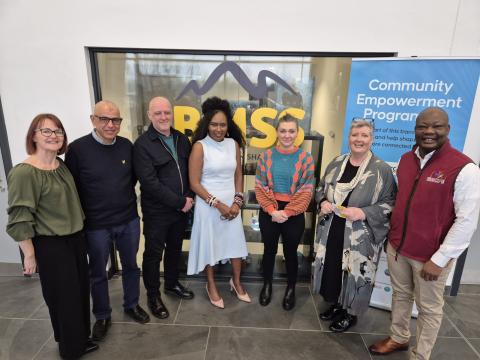
The Community Empowerment Programme (CEP) is being delivered as part of the Belfast PEACEPLUS Local Community Action Plan. This project is supported by PEACEPLUS, a programme managed by the Special EU Programmes Body (SEUPB).
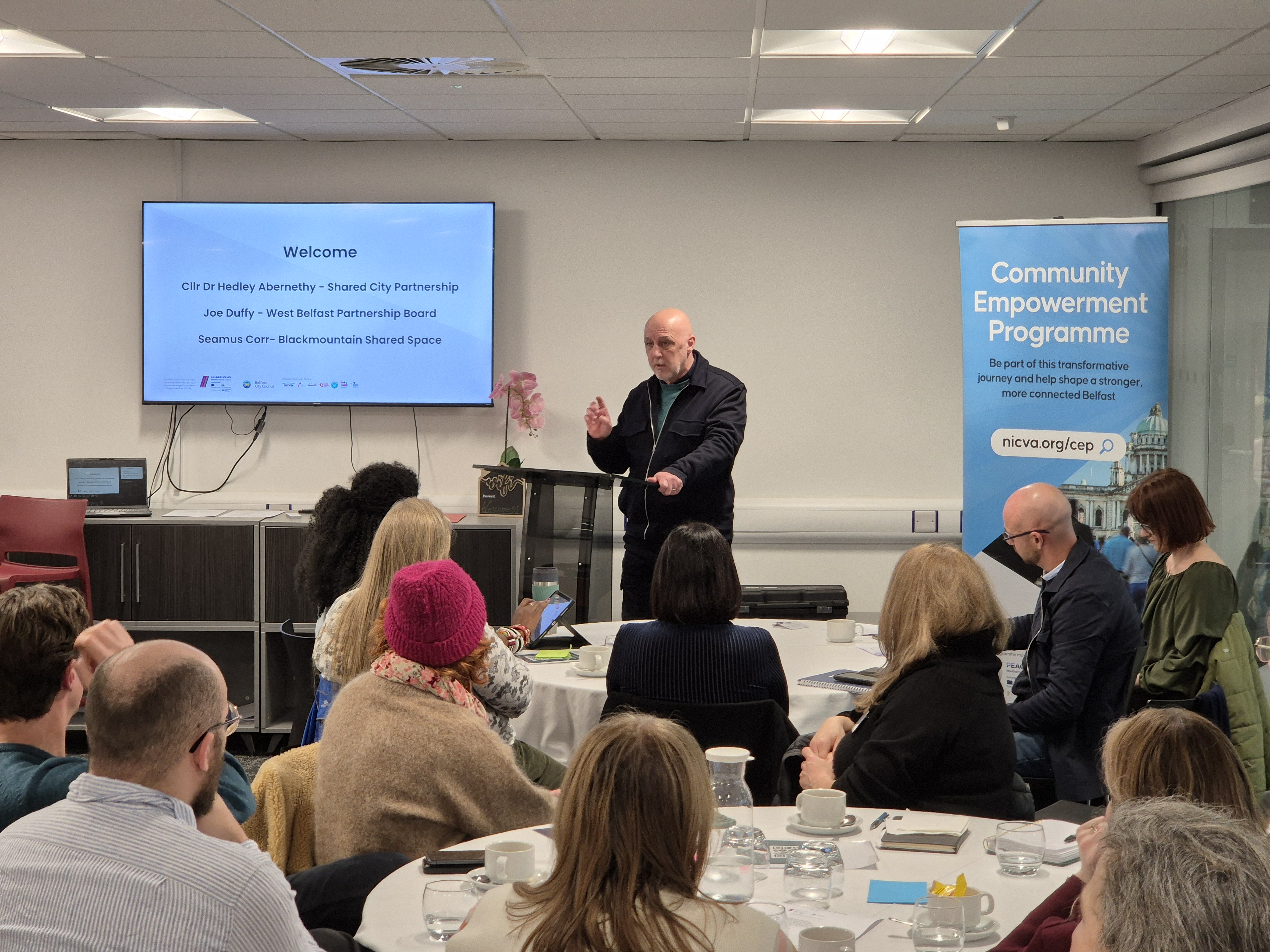
Cllr Dr Hedley Abernethy representing Shared City Partnership and Cllr Joe Duffy from West Belfast Partnership welcomed everyone and introduced the theme and purpose of the day. They set the CEP in the context of PEACEPLUS objectives and emphasised the importance of inclusivity in community development.
Keynote speaker
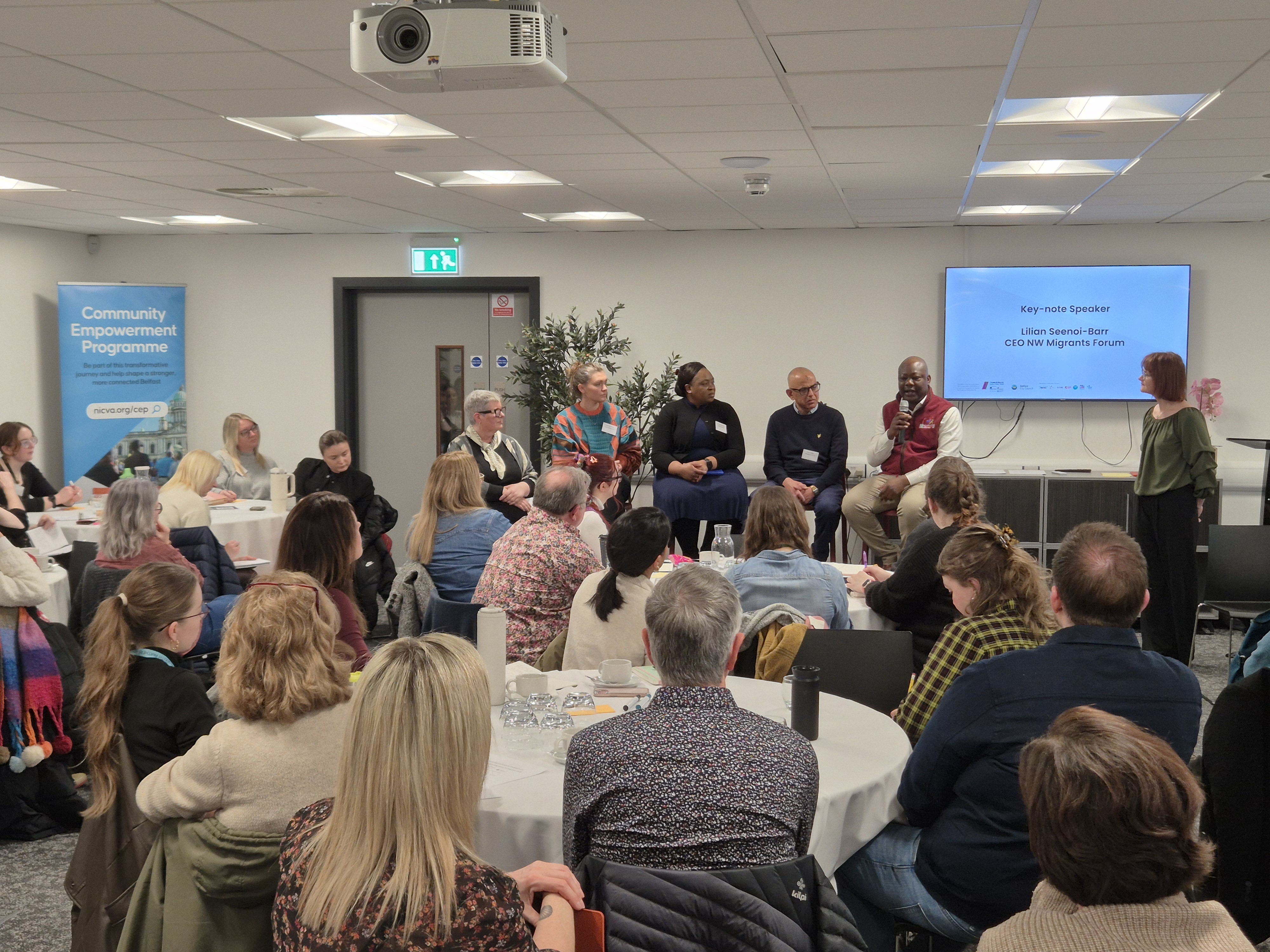
Lilian Seenoi-Barr, CEO NW Migrants Forum, was our key-note speaker. Lilian is a changemaker, bridge-builder, and a powerful voice for women, young people, and minoritised communities. Born in Kenya, Lilian’s early experiences of injustice ignited a lifelong commitment to human rights, racial justice, and economic equality.
Lilian reminded the audience that inclusion is not optional it is essential. We need to change frustration into action and emphasised that empowerment is not giving people answers, it is creating conditions where they can shape their own. Through stories from her personal experience Lilian challenged us that communities do not need saving, they need a voice.
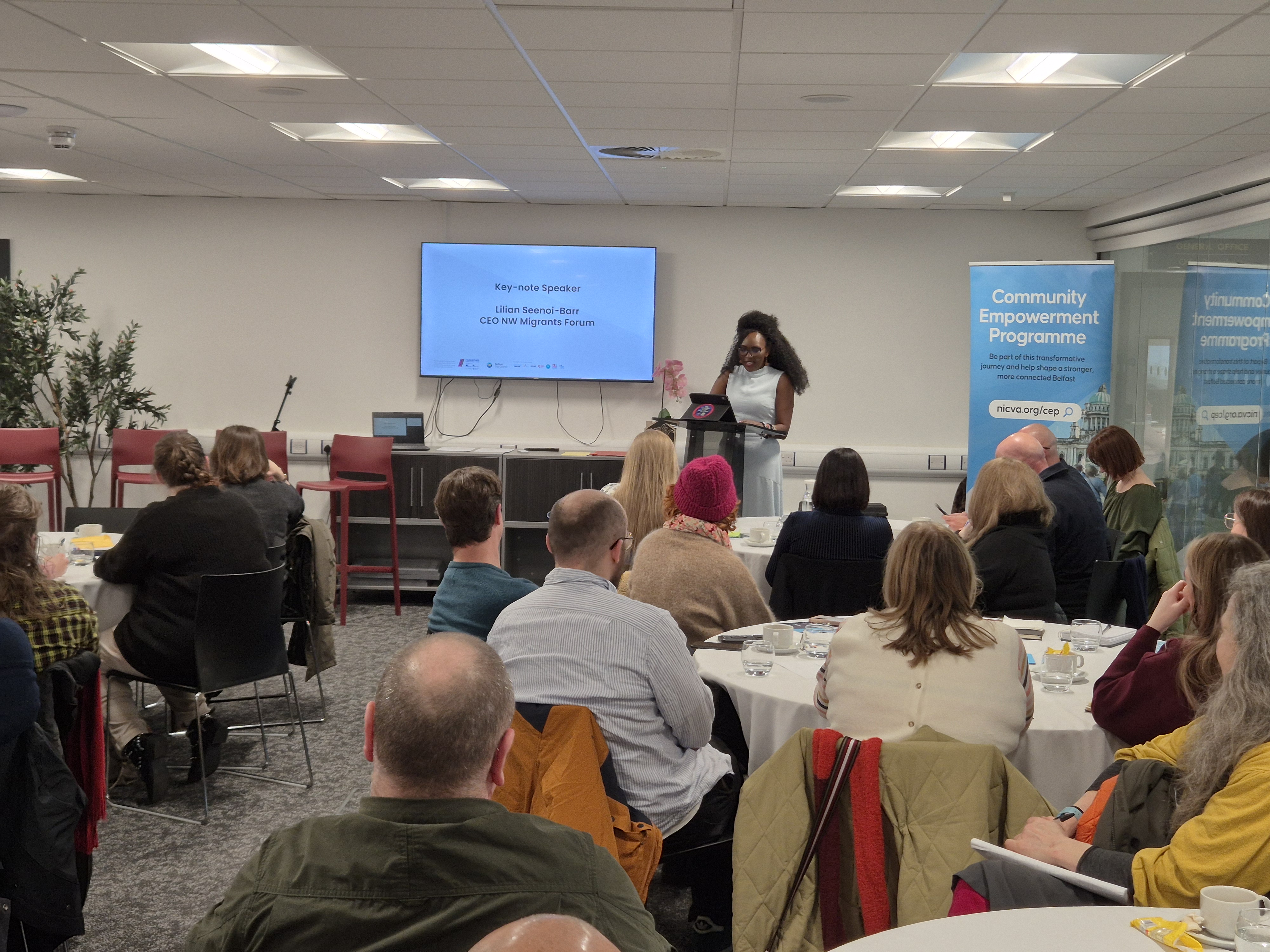
Her advice was to go directly to the people, ask them, build trust. She said that trust is not built in strategy documents, it is built in kitchens and youth clubs. She reminded us that communities know the solutions to the issues they are experiencing, we need to ask them and truly involve them.
She ended with these powerful and challenging words:
“Years from now people will not ask how many programmes did you deliver, they will ask did we widen influence? Did we build trust across differences? Did we make it possible for people who once felt invisible to shape their own future? Communities do not become strong by accident they become strong because people chose to organise, to question and to act. I leave you with one question – who is missing from your own table and what will you do practically and courageously to bring them into real influence?”
Panel
Following this, we had an expert panel who spoke of their personal and professional experience of inclusive practice and how they had developed a sense of belonging and created opportunities for influence and change.
- Glen Phillips – Homeplus
- Jahswill Emannuel – Multi-Ethnic Sports and Cultures NI
- Joanne Kinnear - North Belfast Partnership
- Lori Gatsi-Barnett - JoinHer Network
- Lynda Whinnery - Youth Initiatives
Joanne shared her experience as part of the North Belfast Partnership and described how they had engaged with the local community and involved them in decision-making and developing solutions to local issues. She spoke of how the communities in North Belfast had evolved and changed over the years and what was being done to create the sense of belonging that is so important, including the development of the EDI Charter.
Jahswill shared his experiences of moving to Northern Ireland from Nigeria in 2004, and experiencing racially motivated attacks. He chose not to let hate define his journey, but instead to build spaces of belonging. Since founding MSCNI in 2016, they have engaged thousands of young people through sport, intercultural festivals and peace-building residentials, creating shared spaces where local and migrant communities participate together.
Glen talked about his 30 years’ experience of paid and voluntary community work in West Belfast and how he was lucky to have witnessed many examples of brilliant grassroots, bottom-up community work. He spoke of his desire for this to continue in our much more diverse city in the future and how the work with Homeplus was a good example of this.
Lori spoke of her experience personally and through The JoinHer Network. Through working across business, community, and leadership spaces, JoinHer supports organisations to build resilience, inclusive leadership, and sustainable impact. She encouraged us all to consider what we have in common and not to focus on differences. She described how we can work together to support each other and how people need to see themselves in community to feel they belong.
Lynda described her personal experience of diversity through being involved with Youth Initiatives as a young person and now working with them in community relations. She emphasised the importance of listening and being open, respecting others and giving young people and others the opportunity to learn and ask questions.
Some of the learning from the panel
- Community development works best when it creates shared experiences, not just shared strategies.
- Move from representation to participation - It’s not enough to invite diverse communities into rooms. We must involve them in planning, leadership and decision-making.
- Fund relationships, not just projects - Short-term funding builds activities. Long-term funding builds trust. Sustainable inclusion requires time and consistency.
- Equip leaders with the right skills - Inclusive leadership requires intentional effort, self-reflection, awareness of bias, strong communication and the courage to have difficult conversations. Inclusion doesn’t happen by accident, it happens by design.
- Educate parents alongside young people - When young people learn about inclusion, respect and diversity at youth clubs, but those values are not reinforced at home, the impact can be limited. By engaging parents through dialogue sessions, workshops or community events, we create alignment between home and community spaces. This strengthens intergenerational understanding, reduces misconceptions, and builds a consistent message of belonging.
- Consider whether PSNI are brought along to community meetings that asylum seekers and refugees are attending. Community workers need to think about this. Ethnic minorities are not inherently criminals, so do the PSNI need to be at outreach meetings and events?
- Prioritise relationships in partnership work. Making sure it is not tokenistic but really collaborative in the longer term, weekly involvement with each other for longer-lasting meaningful relationships to be built.
- Seek funding together where both sides benefit in paid workers, resources etc so you are allies in funding rather than competitors.
“What matters most to me is this: when a young person who once felt excluded now says, ‘I belong here.’ Inclusion is not a policy, it is proximity. When people meet, play, eat and learn together, prejudice begins to dissolve. Sport taught me something powerful, on the pitch, you only win when everyone plays their position. Community development is the same.” - Jahswill Emannuel – Multi-Ethnic Sports and Cultures NI
To any good quality experienced community worker in Belfast, have confidence in your abilities and do not be deterred from working with newcomers in our communities by gatekeepers or self-proclaimed 'experts'. - Glen Phillips – Homeplus
Roundtable discussion
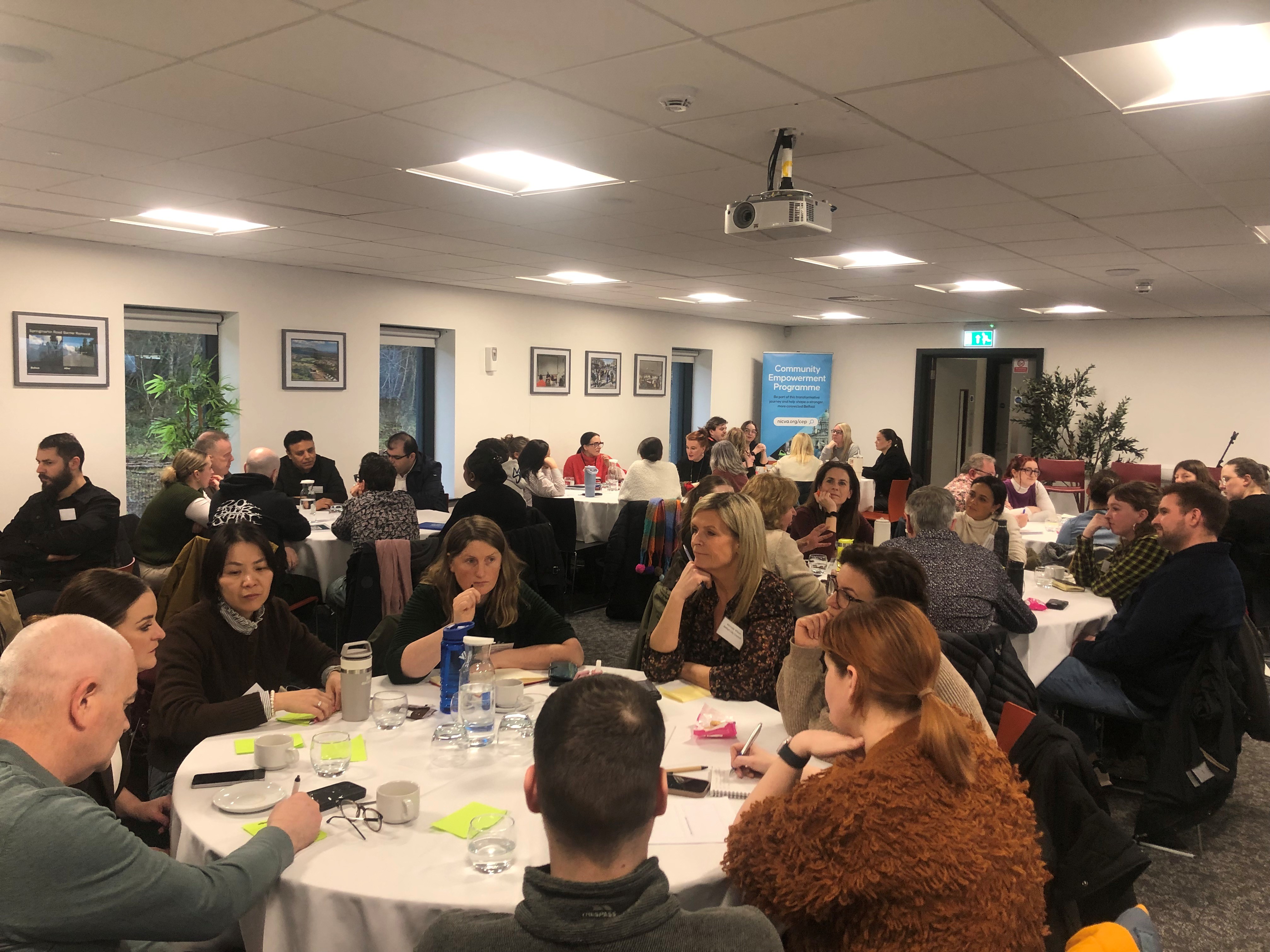
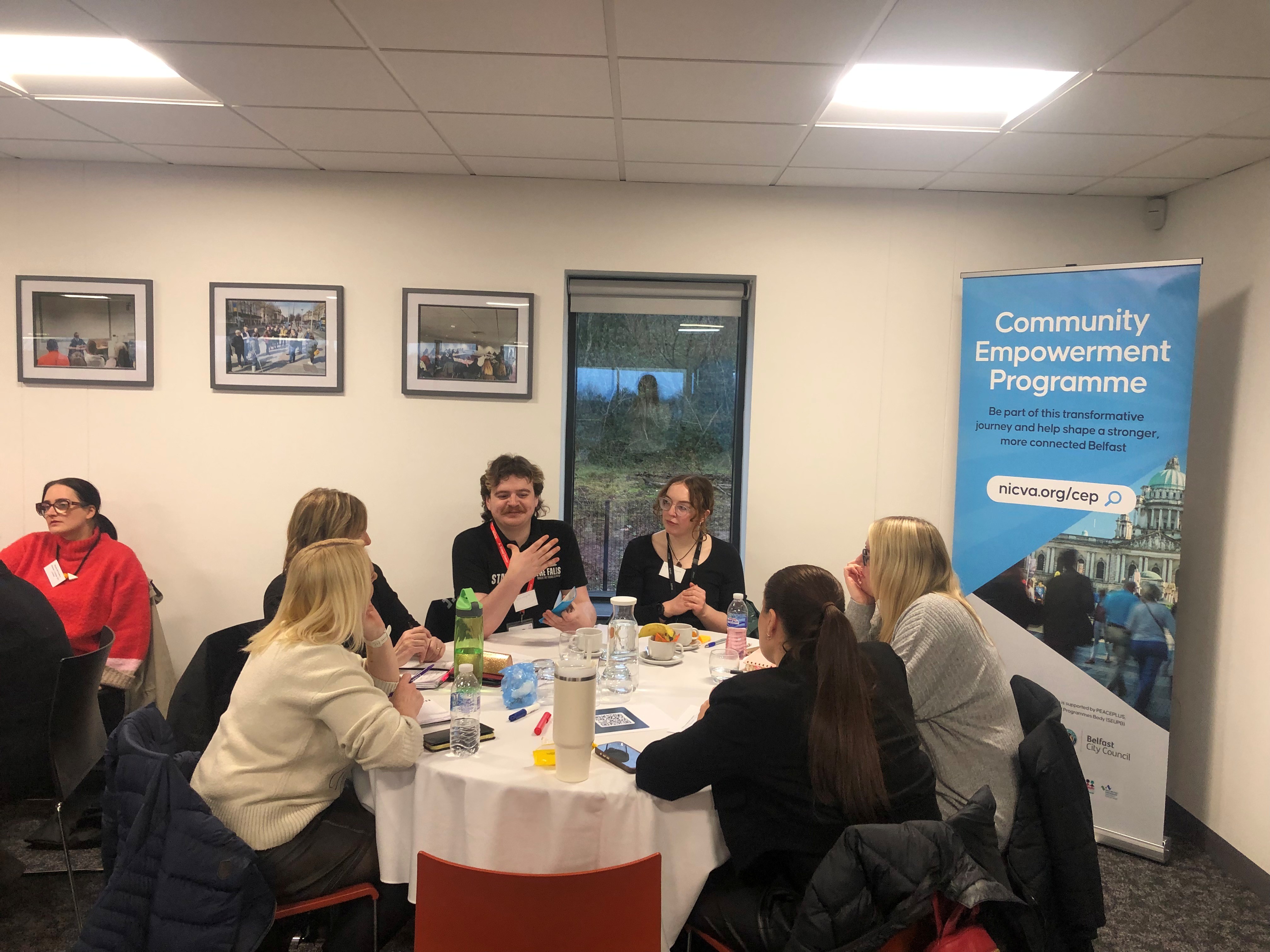
Before lunch we moved into roundtable discussions talking about inclusion challenges, success stories and opportunities for collaboration. Each group identified 2-3 key inclusion priorities which were shared with the wider audience.
- Intergenerational responses and attitudes must be challenged for young people to change
- A true community development approach encourages decisions to be made by people and not about people
- Inclusion doesn’t always have to be a strategy – sometimes it happens organically
- We need to think outside the box to engage local communities
- We must avoid extraction from communities or tokenistic practices, and be wary of tick box exercises that are sometimes part of funding requirements
- Capacity is a big issue - in this sector we are often asked to do more with less
- Intersectionality is important – no one has only one identity, people wear multiple hats
- We have to educate upwards as well as downwards. It’s easy to see issues if you’re working on the ground but not if you’re office-based.
- We can’t educate everyone directly but we can educate the educators
A full report on the roundtable discussions is linked to this article.
Workshops
After lunch we had 3 workshops delivered by the CEP partners
- Community Research Toolkit for Collaboration – Joanne Hawell and Julie Russell, Greater Shankill Partnership
- Community Conversations – Denis Long and Fiona Molloy Forward South Partnership
- EDI charter – Seen. Heard. Included - Shannen O’Connor and Michelle Wilson, Marrowbone Community Association
Resources from the Workshops
Childhood Development Initiative - Childhood Development Initiative: Our Community Research | Childhood Development Initiative
Community Research Toolkit: A Toolkit for Collaboration - Community Research Toolkit:
Constructive Dialogue Toolkit — Institute for Integrated Transitions (IFIT) - https://ifit-transitions.org/toolkit-for-constructive-dialogue-in-polarised-contexts/
Community Conversation Toolkit — Ulster University & Integrated Education Fund - https://www.ief.org.uk/our-work/publications/community-conversation-toolkit/
Community Dialogue Northern Ireland - https://www.communitydialogue.org/resources
More information
If you would like to know more about the CEP please visit our programme page here or contact [email protected].